
Douro Gastronomy: Flavors, Recipes and Where to Eat
In the Douro Valley, eating is an act of belonging. The Douro cuisine is born from the schist soil, the wood-fired oven, and generations of cooks who have learned to transform simple products into comforting meals. There is no rush or artifice here: there is time, gentle heat, and the region’s wine accompanying each dish. Those who visit the valley soon discover that gastronomy is as important as the river and the vineyards to understanding the territory.
This article proposes a journey through the essential flavors of the region, two recipes to take the Douro home, and some tips for choosing the right place to sit at the table.
A cuisine made of land and time
The cuisine of the Douro region is, above all, a cuisine of resourcefulness and seasonality. Each season brings its products, and each product has its moment. On the slopes, alongside the vineyards, grow olive trees, almond trees, orange trees, and cherry trees, giving the valley a varied and generous pantry.
The wood-fired oven is the main protagonist. It is in this oven that meats are slowly roasted, rice and potatoes are cooked, and many of the festive dishes are prepared. The influence of neighboring Trás-os-Montes and Beira Alta can be felt in the sausages, smoked meats, and game dishes, while the river and cod, so present on the Portuguese table, complete the menu.
Flavors you can’t miss
Roast goat cooked in a wood-fired oven: Perhaps the most emblematic dish of the region. The meat, tender and juicy, is seasoned with garlic, wine and lard and slowly roasted until golden brown, usually accompanied by roasted potatoes and oven-baked rice.
Oven-baked rice: Cooked in a roasting pan with sausage and meats, it develops a golden crust that makes it irresistible. It’s a dish meant for sharing, very common at family lunches and celebrations.
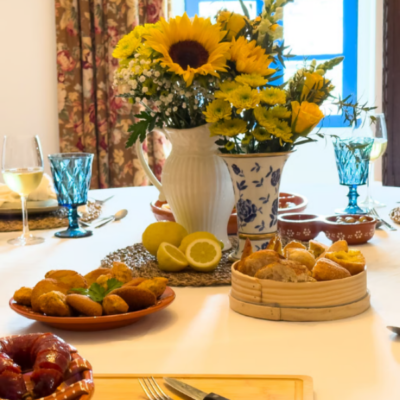
Cured and smoked meats: Alheiras (Portuguese sausages), chouriços (Portuguese sausages), farinheiras (Portuguese sausages), and salpicões (Portuguese cured sausages) are part of the region’s identity.
They are served on platters for snacking, in oven-baked dishes, or simply grilled with bread.
Lamego ham and bola (a type of bread filled with meat): Two traditional products from the Lamego area. Cured ham and bola, a type of bread stuffed with meat, are an excellent way to start a meal or have a hearty snack.
Douro-style cod: Cooked in a variety of ways, cod in the Douro region is found in versions with regional olive oil, potatoes, and vegetables, in simple and comforting dishes.
Game and winter meats: In the colder months, dishes of wild boar, rabbit, or partridge appear on the menu, cooked with wine and aromatic herbs.
Sweets: from almonds to cherries.
If the savory dishes are robust, the confectionery is a delicate ending. Almonds, harvested in the orchards of the Upper Douro, are used in cakes, sweets, and preserves. The cherry, famous in the lands of Resende, appears in sweets, liqueurs, and fresh at the beginning of summer. Orange and honey flavor desserts, while convent sweets, with eggs and sugar, remain one of the region’s great legacies. A well-made sponge cake, an egg sweet, or a small bowl of rice pudding are classic endings to a Douro meal.
Wine and food: the natural pairing.
In the Douro, wine is not just an accompaniment: it’s part of the recipe. The DOC Douro reds, full-bodied and with good structure, pair perfectly with roasted meats and cured meats. The fresh and mineral whites are great for fish, appetizers, and cheeses.
And Port wine, whether a tawny with notes of dried fruit or a more fruity ruby, is the ideal pairing for sweets made with almonds and eggs.
Two Traditional Recipes to Prepare at Home
Douro-Style Roast Kid
Roast kid is one of the most emblematic dishes of Douro cuisine. Prepared with simple seasonings, white wine, and oven-baked golden potatoes, it’s an ideal recipe to gather the family around the table and enjoy the traditional flavors of the region.
Ingredients (4 to 6 people)
- 1.5 kg of kid, preferably leg and shoulder
- 4 cloves of garlic
- 1 bay leaf
- 2 tablespoons of lard or olive oil
- 1 glass of white wine
- 1 kg of potatoes
- Salt, pepper, and paprika to taste
Preparation Method
The day before, season the kid with chopped garlic, salt, pepper, paprika, bay leaf, and white wine. Coat the meat well with the seasonings, cover, and let it marinate in the refrigerator overnight.
The next day, arrange the kid in a roasting pan and drizzle with melted lard or olive oil. Bake in a preheated oven at 180°C for about an hour and a half. Throughout the cooking time, baste the meat with its own sauce to keep it tender and juicy.
Halfway through the cooking time, add the quartered potatoes and coat them in the sauce. Bake until the meat is golden brown and the potatoes are tender, adjusting the baking time as needed.
Serve piping hot, accompanied by a fresh salad. This dish celebrates the traditional cuisine of the Douro region, where good ingredients and patience make all the difference.
Rice pudding with almonds
Creamy, aromatic, and delicately sprinkled with cinnamon, rice pudding is a much-loved dessert on Portuguese tables. In this version, sliced almonds add a crunchy texture and a special touch to a classic homemade dessert.
Ingredients
- 200 g of rice
- 1 liter of milk
- 1 lemon peel
- 1 cinnamon stick
- 150 g of sugar
- 3 egg yolks
- 1 pinch of salt Sliced almonds and cinnamon powder for decoration
Preparation method
Start by heating the milk in a saucepan with the lemon peel, cinnamon stick, and a pinch of salt. When hot, add the rice and cook over low heat, stirring regularly to prevent sticking to the bottom.
When the rice is soft and the mixture has a creamy consistency, add the sugar and stir until well dissolved. Remove the pan from the heat for a few moments.
In a bowl, lightly beat the egg yolks and mix them with a few spoonfuls of the hot rice to temper the eggs without cooking them immediately.
Incorporate this mixture into the pan and return to low heat for a few minutes, stirring constantly and without letting it boil.
Remove the lemon peel and cinnamon stick. Divide the rice pudding into individual bowls or a serving dish and garnish with sliced almonds and a dusting of cinnamon. Serve warm or cold, depending on your preference.
Where to eat: how to choose well in the Douro
To discover the true essence of Douro cuisine, it’s worth seeking out different types of restaurants, each with its own way of valuing local products and traditions.
Restaurants at wine farms
Many Douro estates offer meals prepared with regional products, often accompanied by wines produced on the property itself. They are an excellent option for those seeking a gastronomic experience linked to the landscape and wine culture.
Taverns and snack bars
Simple, cozy and with a family atmosphere, these establishments are ideal for tasting traditional Portuguese cuisine without much fuss. Roast kid, oven-baked rice and daily specials deserve special attention.
Restaurants by the river
In Régua and Pinhão, among other locations, there are places where the dining experience combines with the proximity of the Douro. Some favor traditional recipes, while others reinterpret regional flavors with a contemporary approach.
Restaurants at rural hotels
Rural hotels and farm tourism units have been investing more and more in local gastronomy. Many restaurants offer menus inspired by regional products, sometimes complemented by wine tastings and pairing suggestions.
Tips for a good gastronomic experience
- Book in advance, especially on weekends and during the harvest season.
- Ask about the daily specials and house specialties.
- Ask for wine recommendations to accompany the meal.
- Confirm opening hours and closing days before you go.
A territory to be discovered at the table
The gastronomy of the Douro reflects the identity of a region shaped by the river, the vineyard slopes and the work of generations. Its traditional dishes are distinguished by their generosity, the simplicity of the ingredients and the respect for the flavors of origin.
More than a meal, eating in the Douro is living an experience that invites you to slow down, appreciate local products and share good moments. Between a goat roasted in the oven, a dessert prepared with time and a glass of regional wine, each table tells a little of the story of this unique territory.
It is this authenticity that makes the Douro a destination to savor, remember, and want to visit again.

- 8 Hours
- Pickup point: hotel / accommodation
- 185.00€

- 3 Hours
- Start: Quinta de Fornelos
- 55.00€