
Douro Region and Tourism: Explore Vineyards and Viewpoints
Among slopes covered in vineyards, paths that cross small villages, and the Douro River that runs through the valley, lies a region where the landscape is one of the main reasons to set off to explore. The Douro brings together nature, tradition, and heritage in a territory that invites you to travel without haste and appreciate every detail.
The Alto Douro Wine Region, recognized as a World Heritage Site by UNESCO, presents a landscape built over centuries. The terraces shaped into the schist slopes are now an inseparable part of the region’s identity and give rise to some of the most impressive scenery in Portugal.
Among the vineyards and farms of the Douro Valley
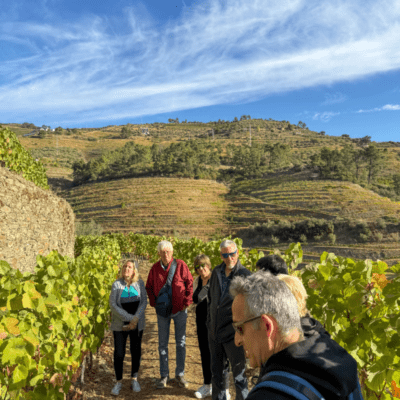
Exploring the vineyards is one of the best ways to understand the Douro. Walking along the slopes, it’s possible to observe the size of the terraces and perceive the work behind a landscape that seems to have been carefully designed on the mountains.
The farms play a fundamental role in this experience. Many welcome visitors to showcase their vineyards, cellars, and production methods, providing an insight into the history of Port wine and Douro DOC wines.
Wine tastings allow you to complete this discovery, combining the flavors of the region with the landscape where the wines are produced.
Viewpoints overlooking the Douro River
The viewpoints are some of the most sought-after locations for those visiting the region, offering different perspectives on the river and the vineyard slopes.
From the top of the mountains, it’s possible to observe the Douro River winding between the terraces, while the farms appear scattered across the slopes. At different points in the valley, the landscape takes on its own characteristics, making each viewpoint a distinct experience.
Besides the views, these places also offer opportunities to take a break, appreciate the silence, and observe the changing colors throughout the day.
Pinhão, the heart of the wine region
Pinhão is one of the most emblematic towns in the Douro and a must-see for anyone wanting to explore the region.
Surrounded by vineyards and historic estates, the town is located at the confluence of the Douro and Pinhão rivers.
The train station is worth a visit for its tile panels, which depict scenes related to wine production and traditional Douro life. From Pinhão, it is also possible to embark on different experiences through the farms and along the river.
Discovering the Douro from the road
The roads that cross the valley allow you to get to know the region spontaneously, with numerous opportunities to stop and appreciate the landscape.
The N222, between Peso da Régua and Pinhão, stands out for its route along the river and the successive views of the vineyards. Traveling along this road is to follow the transformation of the landscape curve after curve, discovering new angles on the Douro.
For those looking for lesser-known places, the secondary roads lead to small villages, rural properties and viewpoints away from the busier routes.
Walking among Gaucho landscapes
Hiking trails are another way to explore the region and allow for a more tranquil approach to nature. Walking among vineyards, olive groves, and small villages reveals a more rural side of the Douro and allows you to observe details that often go unnoticed when traveling by car.
Along the paths, there are open landscapes overlooking the valley, small agricultural buildings, and traces of the relationship between the communities and the land.
The wine and identity of the Douro
The Douro landscape cannot be separated from its winemaking tradition. The vineyards are part of the region’s economic and cultural identity and are responsible for some of the most internationally recognized Portuguese wines.
Visiting a farm, learning about the production process, and tasting different wines allows you to understand how the climate, soil, and human labor influence what reaches the glass.
This connection between landscape and wine makes each visit more complete, transforming a simple tasting into a true experience of the territory.
A landscape that changes with the seasons
The Douro never presents exactly the same image. The landscape follows the cycle of the vineyards and transforms throughout the year.
In spring, the fields take on new shades of green and the vineyards begin to awaken.
During the summer, the slopes become warmer and brighter. In autumn, the vineyards take on golden and reddish hues, creating one of the most beautiful times to visit the viewpoints. In winter, the vegetation loses intensity and the design of the terraces becomes even more evident.
An experience to discover without haste
Exploring the Douro through its vineyards and viewpoints is to get to know the region beyond the most well-known places. It is to observe the landscape, meet the people who work the land and understand the history behind each slope.
Between a visit to a farm, a stop at a viewpoint and a stroll through the villages, the Douro reveals its own identity, made of wine, nature and tradition.
More than contemplating a beautiful landscape, traveling through the Douro is to understand how man and nature together built one of the most unique territories in Portugal.

- 8 Hours
- Pickup point: hotel / accommodation
- 185.00€

- 3 Hours
- Start: Quinta de Fornelos
- 55.00€