
Tourism in the Douro Region: All About the Douro Valley
Carved over centuries by human hands and the tranquil force of the river, the Douro Valley is one of the most unique landscapes in Europe. A land of terraces, centuries-old farms, and villages that seem suspended in time, this territory, recognized by UNESCO as a World Heritage Site, offers much more than breathtaking views: it proposes a true immersion in the culture, gastronomy, and leisurely pace of life in the Douro region.
Whether you’re looking for a romantic weekend, a family getaway, or simply a return to nature, the Douro has the rare ability to surprise you at every turn. Here’s a route through the landscapes, wines, and culture that make this region a destination to remember.
Landscapes that fill the eyes
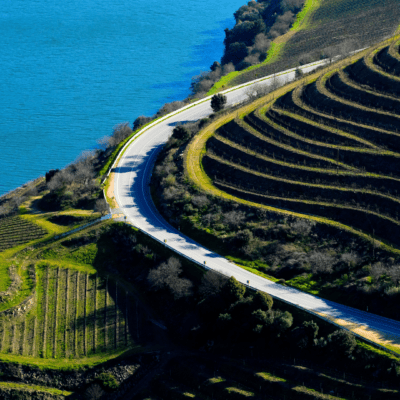
Traveling through the Douro is, above all, an exercise in contemplation. The winding roads that follow the river reveal, at every kilometer, a new angle on this natural amphitheater of vineyards and schist:
- Peso da Régua and its viewpoints: Considered the administrative heart of the region, Régua is also the starting point for some of the best viewpoints in the valley, with wide views over the river and the terraced slopes that stretch as far as the eye can see.
- The N222, between Régua and Pinhão: Frequently cited as one of the most beautiful roads in the world, this road meanders alongside the river, offering landscapes that change tone according to the light of day, from the golden hues of the morning to the copper of dusk.
- Pinhão and the river bend: A small riverside village surrounded by some of the Douro’s most prestigious estates, Pinhão is the ideal spot to admire the iconic bend the river draws between the slopes, one of the most photographed postcards of the region.
- São João da Pesqueira and the schist viewpoints: More secluded, this area reveals lesser-known but equally breathtaking viewpoints, where the silence and immensity of the landscape invite a leisurely pause.
Wines that tell a story
You can’t talk about the Douro without talking about wine. Birthplace of the world’s first demarcated and regulated wine region, this territory has lived and breathed for the vineyard for over two centuries.
Many farms open their doors to visitors, offering guided tours of the vineyards, walks through centuries-old cellars, and guided tastings that allow you to understand the process, from harvest to glass. It’s a unique opportunity to get to know up close the hard and passionate work behind each bottle.
Between September and October, during the harvest season, the region gains a special energy. It’s a time for celebration, sharing, and, in many farms, for visitors to actively participate in traditional harvests. Douro DOC wines and the world-famous Port wine are living proof of this connection between man, land, and time.
- Culture and flavors with their own identity: The soul of the Douro is revealed both in its heritage and at the table, and both deserve to be explored calmly.
- Railway heritage: Stations like Pinhão are veritable open-air galleries, with tile panels depicting scenes of daily agricultural life and harvests, an artistic testament to the region’s relationship with the vineyard.
- Douro gastronomy: At the table, the region offers robust and flavorful dishes, such as Mirandesa-style steak, beans with pork ribs, or traditional alheira sausages, always accompanied by a good house red wine. Conventual desserts, rich in eggs and sugar, conclude each meal in grand style.
- Boat trips on the river: A trip aboard a rabelo boat or a river cruise allows you to observe the region from a completely different angle, gliding slowly between the banks carved into terraces.
An invitation to slow down
In a world dominated by haste, the Douro emerges as an invitation to rediscover the essential: the silence of the slopes, the taste of a glass of wine drunk slowly, and the genuine hospitality of its people. More than just a destination, it’s an experience that stays in your memory long after the trip is over.

- 8 Hours
- Pickup point: hotel / accommodation
- 185.00€

- 3 Hours
- Start: Quinta de Fornelos
- 55.00€